
Airfares are up, trains keep getting faster, and more people want to cut their travel emissions. So is the train really better than flying in Europe in 2026? We compared 12 popular city pairs on door-to-door time, advance fares and CO2, then added the scenic trips worth taking slowly.
Last checked: 16 October 2026
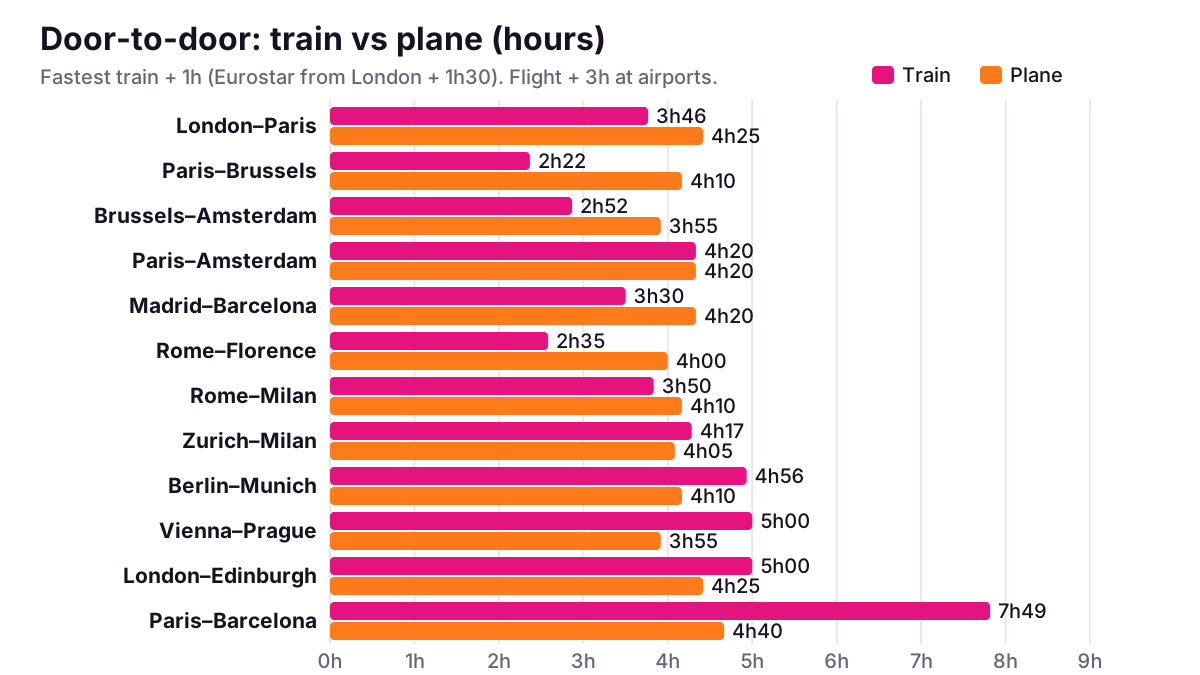
On trips of up to about 500 km between big city centres, the train usually wins. It is as fast or faster door to door, advance fares start at €9 to €35, and CO2 per person is roughly 77% to 97% lower. London–Paris, Paris–Brussels, Madrid–Barcelona and Rome–Florence are clear train wins.
The plane is still faster on longer trips like Paris–Barcelona (about 3 hours quicker door to door) and on a few 4-hour rail routes like Vienna–Prague. Book trains early: the cheapest seats open 3 to 12 months ahead, depending on the operator.
The short version
- 9 of the 12 routes are faster or level by train once you count airport time. The other 3 are close calls where the train still wins on price and CO2.
- Cheapest advance fares we found: Ouigo Madrid–Barcelona from €9, Vienna–Prague from €14.90, Deutsche Bahn Super Sparpreis from €17.99.
- New in 2026: the Paris–Berlin night train is back (European Sleeper, since 26 March) and a Brussels–Milan sleeper started on 9 September.
- The Glacier Express does not run from 11 October to 4 December 2026. Plan Swiss scenic trips around that gap.
- Codes:
triptrain5pgives new Trip.com users 5% off trains and Eurostar, andRC20OFFgives 20% off a UK Railcard.
Train vs plane in Europe: 12 routes compared
Times are door to door. Fares are the lowest one-way advance fares listed by operators or route guides, and they sell out first.
| Route | Fastest train | Train door to door | Flight door to door | Train fare from | CO2 train / plane | Winner |
|---|---|---|---|---|---|---|
| London–Paris | 2h16 (Eurostar) | 3h46 | 4h25 | about £51 | 1.4 kg / 53 kg | Train |
| Paris–Brussels | 1h22 (Eurostar) | 2h22 | 4h10 | €29 | 1.1 kg / 41 kg | Train |
| Brussels–Amsterdam | 1h52 (Eurostar) | 2h52 | 3h55 | €25 to €29 | 0.7 kg / 27 kg | Train |
| Paris–Amsterdam | 3h20 (Eurostar) | 4h20 | 4h20 | €35 | 1.7 kg / 66 kg | Train (time is a tie) |
| Madrid–Barcelona | 2h30 (AVE, Ouigo, Iryo) | 3h30 | 4h20 | €9 (Ouigo) | 17.7 kg / 78 kg | Train |
| Rome–Florence | 1h35 (Frecciarossa, Italo) | 2h35 | 4h00 | about €20 | 8.1 kg / 36 kg | Train |
| Milan–Venice | 2h27 (Frecciarossa) | 3h27 | No direct flight | €19.90 | 8.5 kg / none | Train |
| Rome–Milan | 2h50 (non-stop Frecciarossa) | 3h50 | 4h10 | €29.90 | 16.7 kg / 73 kg | Train |
| Zurich–Milan | 3h17 (EuroCity) | 4h17 | 4h05 | CHF 38 | 7.6 kg / 34 kg | Train (time is a tie) |
| Berlin–Munich | 3h56 (ICE Sprinter) | 4h56 | 4h10 | €17.99 | 17.7 kg / 78 kg | Train on price and CO2, plane 46 min faster |
| Vienna–Prague | about 4h (railjet, RegioJet) | 5h00 | 3h55 | €14.90 | 8.8 kg / 39 kg | Train on price and CO2, plane about 1h faster |
| London–Edinburgh | about 4h (LNER) | 5h00 | 4h25 | about £25 (Lumo) | 18.7 kg / 82 kg | Train on price and CO2, plane 35 min faster |
| Paris–Barcelona (for contrast) | 6h49 (TGV) | 7h49 | 4h40 | €39 | 29 kg / 128 kg | Plane on time |
Route by route: what to know before you book
- London–Paris. Eurostar advises arriving 60 to 90 minutes early, and check-in closes 30 minutes before departure.
- Paris–Brussels. FlightsFrom lists only a few direct flights a day, so the train is the normal choice.
- Brussels–Amsterdam. The slower Eurocity Direct (about 2h08, up to 16 a day) starts from about €25.
- Paris–Amsterdam. Level with flying on time, but you skip the airport and the CO2 is tiny.
- Madrid–Barcelona. Renfe AVE and Avlo, Ouigo and Iryo compete. Ouigo’s €9 fare includes a hand bag and a cabin bag only.
- Rome–Florence. High-speed trains run all day, so you rarely need to plan around one train.
- Milan–Venice. No direct flight, so the train wins by default.
- Rome–Milan. The 2h50 non-stop runs only twice a day. Trains with stops take up to about 3h40.
- Zurich–Milan. 14 direct EuroCity trains a day, and the CHF 38 fare includes the seat.
- Berlin–Munich. The ICE Sprinter runs about 4 times a day. Slightly slower than flying, much cheaper.
- Vienna–Prague. Trains run about every two hours. RegioJet stays cheap close to departure.
- London–Edinburgh. LNER is fastest, Lumo is often cheapest.
Almost 2 hours faster door to door than flying.
Ouigo from €9 for a 2h30 high-speed trip.
About 1.4 kg by Eurostar vs about 53 kg by plane.
Level on time, and the train goes centre to centre.
When the plane still wins
Trains lose once the ride goes much past 4 to 5 hours, or when there is sea in the way. Paris–Barcelona is the clearest case: the fastest direct TGV takes 6h49, and a 1h40 flight is about 3 hours quicker door to door. The train still saves about 100 kg of CO2 per person.
Islands and long hops are the other case. Hamburg–Palma is about 2h45 by plane, and Cologne–Rome about 2 hours. Eurowings flies both. For trips like these, a low-cost flight is the practical choice. Eurowings BASIC fares start under €35 on some European routes, with hand luggage only.
See Eurowings fares →More on the airline: Eurowings deals page.
What is new for European rail in 2026
- Paris–Berlin night train is back. ÖBB’s Paris Nightjets ended in December 2025 after France withdrew its subsidies. European Sleeper restarted Paris–Berlin via Brussels on 26 March 2026, three nights a week, with a Hamburg stop from 13 July. Seats start at €40 and couchettes at €60.
- Brussels–Milan by sleeper. European Sleeper started a Brussels–Cologne–Zurich–Milan night train on 9 September 2026, three times a week via the Gotthard. Budget seats start at €29.99 and couchettes at €49.99. From mid-December it is due to run via Antwerp, Breda and Eindhoven.
- Faster Paris–Munich. Deutsche Bahn and SNCF plan a faster Paris–Munich high-speed service from the end of 2026, with more trains than today’s single daily TGV each way.
- Longer booking windows in Germany. Deutsche Bahn sells Super Sparpreis tickets up to 12 months ahead.
- Faster East Coast trains in the UK. LNER’s December 2025 timetable added 37 weekday services and brought London–Edinburgh close to 4 hours.
Not an EU citizen? New border checks affect trains too, including Eurostar. See our guide to travel entry rules and fees in 2026.
The most scenic rail trips in Europe
These are trips where the view is the point, not the speed.
1. Bernina Express (Switzerland to Italy)
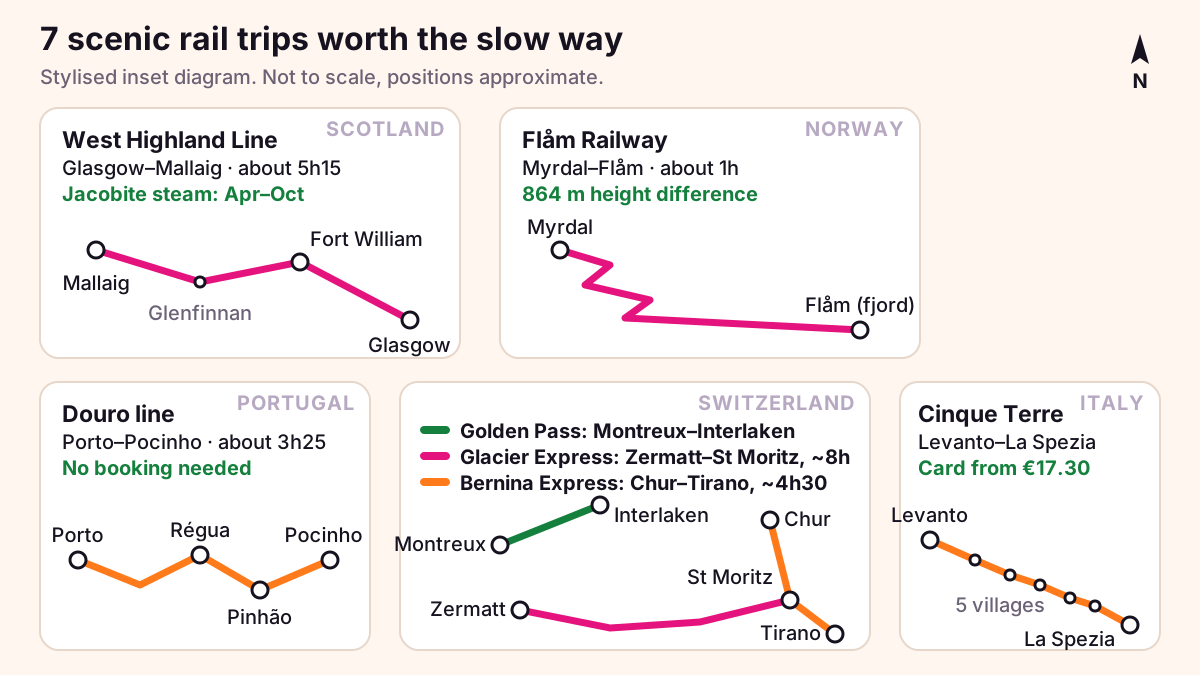
Chur to Tirano, 144 km in about 4h30, with 55 tunnels, 196 bridges and a high point of 2,253 m at Ospizio Bernina. The panoramic cars need a seat reservation: CHF 36 from 2 May to 25 October 2026, CHF 32 at other times. Tip: Interrail and Swiss Travel Pass holders only pay the reservation. Hourly local trains on the same line have unreserved seats and windows that open.
2. Glacier Express (Switzerland)
Zermatt to St Moritz in about 8 hours, over 291 bridges and through 91 tunnels. Seat61 lists the reservation at CHF 54. Reservations open 93 days ahead. There is no Glacier Express from 11 October to 4 December 2026. The winter service starts on 5 December.
3. Golden Pass (Switzerland)
Montreux to Interlaken, with a second train on to Lucerne. The panoramic cars need a reservation, but the regular trains on the route do not. A Swiss Saver Day Pass from CHF 52 is valid on any train that day if you buy early, with panoramic reservations extra.
4. West Highland Line (Scotland)
Glasgow to Fort William in about 3h45 and on to Mallaig in about 5h15, with three trains a day (one on Sundays). Sit on the left going north for the Glenfinnan Viaduct. The Jacobite steam train runs Fort William–Mallaig from early April to late October, from £69 return. Book it early.
5. Flåm Railway (Norway)
Myrdal to Flåm, about 20 km in about an hour, with an 864 m height difference. It runs every day of the year and connects with most day trains on the Oslo–Bergen line, so plan it as part of that trip.
6. Douro line (Portugal)
Porto to Pocinho along the Douro river in about 3h25, for €14.80 each way (€12.20 to Pinhão). You do not need to book. Going east, sit on the right for the river until just before Ferradosa, then switch sides. Note: from 3 November 2026 to 24 March 2027, buses replace trains between Marco de Canaveses and Régua.
7. Cinque Terre line (Italy)
Regional trains link Levanto, the five villages and La Spezia. The Cinque Terre Treno Card covers unlimited trains on this line, park buses and the paid trails. One day costs €17.30 in low season (2 November 2026 to 12 March 2027) and €22 to €35 in high season.
Booking tips: when tickets open, passes and railcards
When to book
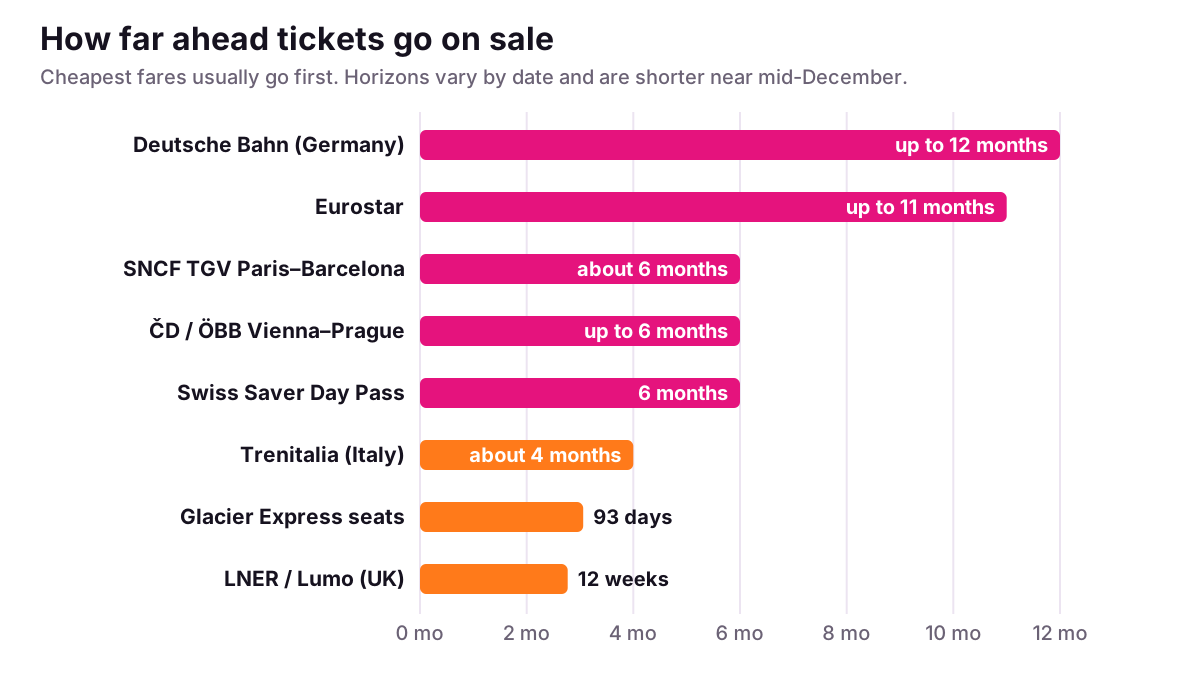
Deutsche Bahn sells up to 12 months ahead. Eurostar opens up to 11 months ahead, though far-off schedules can be incomplete. SNCF, ČD and ÖBB usually open about 6 months ahead, Trenitalia about 4 months, and LNER and Lumo 12 weeks. Set a reminder for the opening date, because the cheapest fares go first.
Rail pass or point-to-point tickets?
An Interrail Global Pass for 2026 costs €283 (adult) or €212 (under 28) for 4 travel days in a month, €381 or €286 for 7 days, and €696 or €522 for a full month, according to Seat61 figures reported by Ulysse. Fast trains add reservation fees: about €35 for Eurostar Paris–London, €13 for a Frecciarossa, €10 to €20 for a TGV and about €10 for a Spanish AVE.
A pass makes sense for several long trips or when you want flexibility. For two or three fixed trips booked early, single tickets are usually cheaper. A €9 Ouigo or a €17.99 Super Sparpreis is hard to beat with a pass.
Railcards and discount cards
- UK Railcards cost £35 a year and give a third off most fares. That includes the 16-25, 26-30, Two Together, Senior and Family & Friends cards. Family & Friends also gives 60% off children’s fares. The Disabled Persons Railcard costs £20.
- Germany: BahnCard 25 and BahnCard 50 both take 25% off Sparpreis and Super Sparpreis fares.
Where codes help
Trip.com sells European trains, Eurostar and UK rail tickets in one app.
Trip.com train codes
| Code | What you get | |
|---|---|---|
triptrain5p | 5% off trains, Eurostar and UK coaches, up to €20 off. new users · ends 1 Jan 2027 | Open Store → |
triptrain2p | 2% off trains and Eurostar. existing users · check the end date in the app | Open Store → |
RC20OFF | 20% off a UK Railcard. new users · ends 31 Dec 2026 | Open Store → |
Source: Trip.com affiliate feed. We haven’t tested these codes at checkout, so check the total drops before you pay.
A £35 Railcard with RC20OFF costs about £28. More on the app in our Trip.com questions guide and Trip Coins explainer, or see all Trip.com deals. If a code is refused, our guide on why coupon codes fail lists the usual reasons.
Italy in a group: ItaliaRail
ItaliaRail sells Trenitalia tickets and offers up to 30% off group travel in Italy, with no code needed. Note that it shows Trenitalia trains only, not Italo, so compare both on busy routes like Rome–Milan.
See ItaliaRail group fares →See also our ItaliaRail deals page.
Data on the train: Saily eSIM
If you want to work on board without relying on the train’s Wi-Fi, an eSIM gives you your own data across borders. Code Indoleads takes 5% off Saily data plans until 31 December 2027. Compare the options in our eSIM vs roaming guide.
More codes on our Saily page. Busy stations attract thieves, so keep bags close: see our list of Europe pickpocket hotspots.
Frequently asked questions
Is it faster to take the train or fly in Europe?
On routes up to about 500 km between city centres, the train is usually as fast or faster door to door, because airports add around 3 hours. London–Paris, Paris–Brussels, Madrid–Barcelona and Rome–Florence are faster by train. On trips over 5 to 6 hours by rail, like Paris–Barcelona, flying is quicker.
Is the train cheaper than flying in Europe in 2026?
Booked early, often yes. Advance train fares start at €9 on Ouigo Madrid–Barcelona, €14.90 on Vienna–Prague and €17.99 on Deutsche Bahn, and you pay nothing extra for an airport transfer. Last-minute train tickets can cost more than a budget flight.
How much CO2 do you save by taking the train instead of flying?
Using Our World in Data factors, a short-haul flight emits about 154 g of CO2 per passenger-km, national rail about 35 g and Eurostar about 4 g. That is roughly 77% to 97% less by train. London–Paris works out at about 1.4 kg by Eurostar vs about 53 kg by plane.
How far in advance should I book European trains?
Book as soon as sales open for the lowest fares. That is up to 12 months ahead for Deutsche Bahn, up to 11 months for Eurostar, about 6 months for SNCF, ČD and ÖBB, about 4 months for Trenitalia and 12 weeks for most UK operators.
Is an Interrail pass worth it in 2026?
It pays off for several long trips or a flexible route. A 4-day Global Pass costs €283 for adults or €212 for under 28s, plus seat reservations on fast trains. For two or three fixed trips booked early, single tickets are usually cheaper.
Is the Glacier Express running in autumn 2026?
No. There is no Glacier Express from 11 October to 4 December 2026, and local trains serve the route with changes. The winter service starts on 5 December 2026.
Sources: Eurostar route pages (London–Paris, Paris–Brussels, Brussels–Amsterdam, Paris–Amsterdam); Seat61 guides (London–Paris, London–Amsterdam, Paris–Barcelona, Prague–Vienna, Italy, Bernina Express, Glacier Express, West Highland Line, Douro Valley, Switzerland); Ouigo Spain; Trenitalia (Rome–Milan Frecciarossa); LNER news (December 2025 timetable); Railcard.co.uk; Monsterdealz on Deutsche Bahn Sparpreis 2026; Everyrail (Zurich–Milan, Madrid–Barcelona, London–Edinburgh, Brussels–Amsterdam); Romewise and Trip.com (Rome–Florence); FlightsFrom flight schedules; Our World in Data, “Which form of transport has the smallest carbon footprint?” (DESNZ 2022 factors); Back on Track, Euronews, VRT, Railway-News and Nightride on 2026 night trains; Ulysse citing Seat61 on Interrail 2026 prices; glacierexpress.ch; Norway’s Best (Flåm Railway); cinqueterre.eu.com (Treno Card). Prices and features change by country; the official site is the final word. Last checked: 16 October 2026. Spicy Coupons is independent and may earn a commission from links on this page.