Last checked: 16 October 2026 · Spicy Coupons editorial team
The best less crowded cities in Japan for 2026 are Fukuoka, Nagoya, Hiroshima (with Miyajima), Kanazawa, Takamatsu with Naoshima, Okayama with Kurashiki, Matsumoto, Takayama, Sendai and Nagasaki. Seven of the ten are within about 2.5 hours of Tokyo or Osaka by train, and every one had less than half of Kyoto’s foreign hotel nights in 2025.
First trip? Kanazawa, Hiroshima and Fukuoka. Quietest? Okayama, Sendai and Nagasaki. Japan’s departure tax went up to ¥3,000 on 1 July 2026, and the JR Pass now costs ¥53,000 for 7 days, so check single fares and regional passes before you buy.
The short version
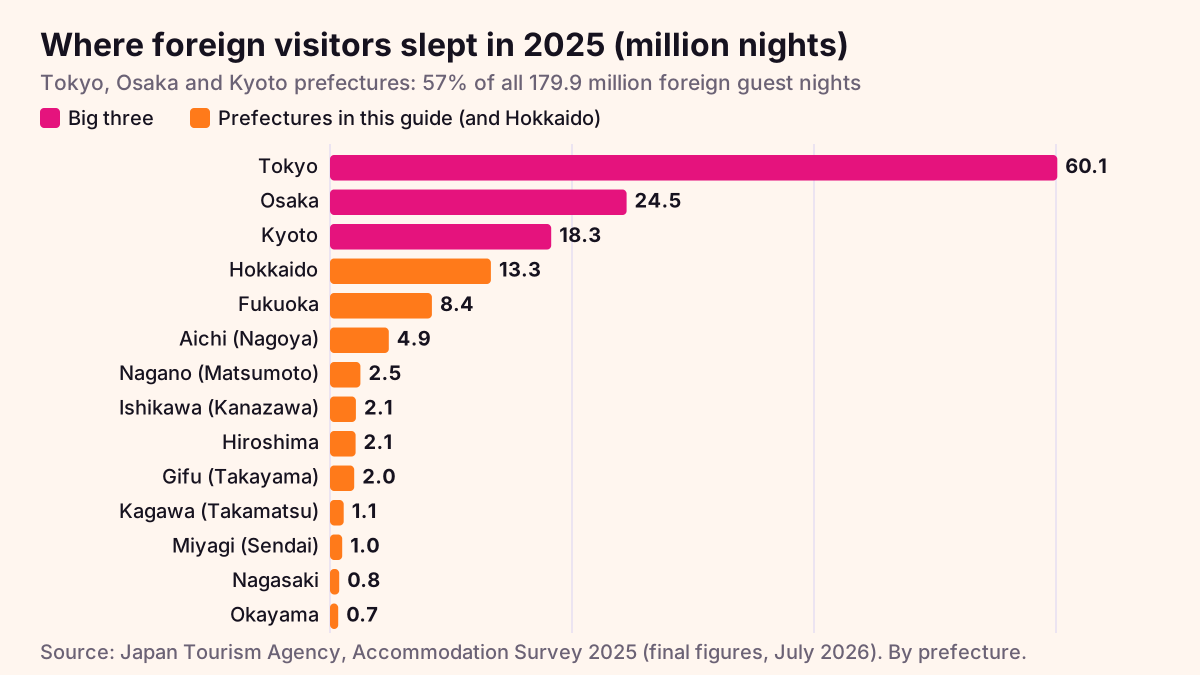
- In 2025, foreign visitors spent 179.9 million nights in Japanese hotels. 57% of them were in just three prefectures: Tokyo, Osaka and Kyoto (Japan Tourism Agency).
- Okayama, Nagasaki, Sendai and Kagawa (Takamatsu) each had about 1.1 million foreign guest nights or fewer in 2025. That is under 2% of Tokyo’s total.
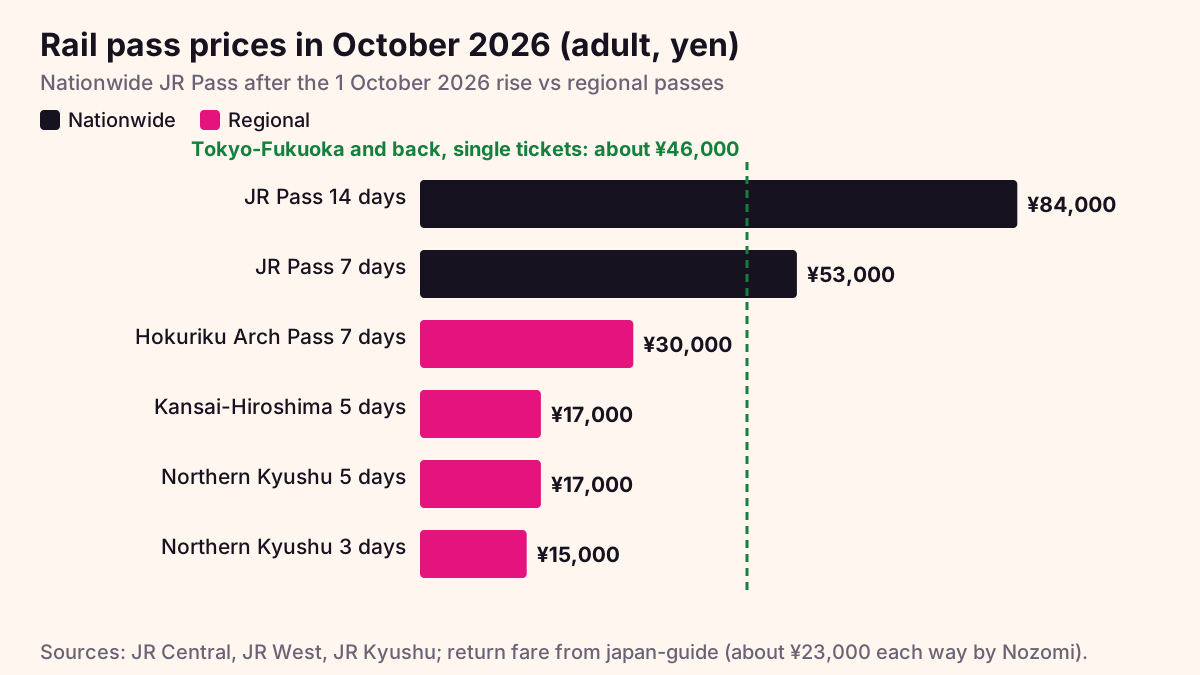
- A 7-day JR Pass rose to ¥53,000 on 1 October 2026. A Tokyo to Fukuoka return by single tickets is about ¥46,000, so the pass only pays off with a lot of long rides.
Why look beyond Tokyo and Kyoto in 2026?
Japan had a record 42.68 million visitors in 2025, up 15.8% on 2024, according to JNTO’s preliminary figures. 2026 has been a little softer: 27.6 million visitors from January to August, down 2.7%, mostly because China told its citizens to avoid Japan and some Southeast Asian flights were cut.
The crowds are not spread evenly. The Japan Tourism Agency’s final 2025 accommodation survey shows 66.3% of foreign guest nights in the eight prefectures of the Tokyo, Nagoya and Osaka metro areas, and only 33.7% in the rest of the country. Kyoto alone had 18.3 million foreign guest nights. Okayama Prefecture had 0.68 million.
Hot spots are also getting pricier. Kyoto raised its lodging tax on 1 March 2026 to up to ¥10,000 per person per night for rooms costing ¥100,000 or more (¥400 for a ¥6,000 to ¥19,999 room). Mount Fuji now charges ¥4,000 on all four trails, with a 4,000-a-day cap on the Yoshida Trail.
What changed for Japan trips in 2026
- Departure tax is now ¥3,000. The International Tourist Tax went from ¥1,000 to ¥3,000 per departure on 1 July 2026. It is added to your plane or ferry ticket.
- Visa fees went up five times for people who need a visa: ¥15,000 single entry and ¥30,000 multiple entry from 1 July 2026 (Ministry of Foreign Affairs). Visa-exempt tourists pay nothing.
- No JESTA yet. Japan’s planned online travel authorisation is targeted for fiscal 2028. You do not need it in 2026. Our 2026 entry rules and fees guide covers the details.
- New local hotel taxes. Sendai added ¥300 per night for rooms of ¥6,000 or more (January 2026), Hiroshima Prefecture ¥200 (April) and Matsumoto ¥200 (June).
- Tax-free shopping becomes a refund from 1 November 2026. You pay the full price, keep the goods with you, do a customs check at the airport (a kiosk or Visit Japan Web), then claim the refund. The ¥5,000 minimum per shop per day stays. Items must be bought within 90 days of leaving.
- JR Pass is more expensive. From 1 October 2026: ¥53,000 (7 days), ¥84,000 (14 days), ¥105,000 (21 days) for an adult ordinary pass. JR says the official online shop keeps the old price for a limited time.
The 10 cities compared
| City | Fastest train | Best for | Best season | Crowds |
|---|---|---|---|---|
| Kanazawa | 2h30 from Tokyo; about 2h20 from Osaka | Gardens, geisha district, seafood | Autumn, winter | Medium |
| Hiroshima + Miyajima | 4h from Tokyo; 1h25 from Osaka | History, island shrine | Spring, autumn | Medium (Miyajima busy midday) |
| Fukuoka | 5h from Tokyo; about 2h20 from Osaka | Food stalls, easy city break | Spring, autumn | Medium |
| Nagoya | 1h40 from Tokyo; about 50 min from Osaka | Castle, museums, food | Spring, autumn | Low |
| Takayama | 2h20 from Nagoya (about 4h30 from Tokyo) | Old town, mountains | April and October festivals | Medium |
| Matsumoto | About 2h30 from Shinjuku | Original castle, Alps base | Summer, autumn | Low |
| Okayama + Kurashiki | 3h18 from Tokyo; 45 min from Osaka | Garden, canal old town | Spring, autumn | Low |
| Takamatsu + Naoshima | 55 min from Okayama | Art islands, udon | Spring, autumn | Low (Naoshima busy weekends) |
| Sendai | About 1h30 from Tokyo | Matsushima Bay, beef tongue | Summer, autumn | Low |
| Nagasaki | About 1h30 from Fukuoka | History, harbour views | Spring, autumn, winter | Low |
Times are the fastest usual services, one way, from JR operator data via Ekitan, japan-guide and local tourism boards. Crowd level is our rating based on 2025 foreign guest nights in each prefecture, adjusted for known hot spots.
The cities, one by one
1. Kanazawa
Kanazawa feels like Kyoto with far fewer people: 2.1 million foreign guest nights in Ishikawa in 2025, against 18.3 million in Kyoto. The Kagayaki Shinkansen takes about 2.5 hours from Tokyo with no change. From Osaka it is the Thunderbird to Tsuruga, then the Shinkansen, about 2 hours 20 minutes in total.
- Walk Kenrokuen garden early, then the Higashi Chaya teahouse district.
- Eat seafood at Omicho Market.
- See the 21st Century Museum of Contemporary Art.
Best season: autumn colours and winter seafood. Hotels: mid-range, with many business hotels near the station.
2. Hiroshima and Miyajima
Hiroshima is a calm, walkable city with a heavy story. The Nozomi takes about 4 hours from Tokyo, and the Mizuho about 1 hour 25 minutes from Shin-Osaka. Miyajima is 25 minutes by JR train to Miyajimaguchi plus a 10-minute ferry. The island charges a ¥100 visitor tax, included in normal tickets.
- Peace Memorial Park and Museum.
- Itsukushima Shrine and its sea gate; stay a night on Miyajima to beat the day-trippers.
- Okonomiyaki, Hiroshima style, with noodles.
Best season: spring and autumn. Hotels: mid-range in the city; island ryokan cost more.
3. Fukuoka
Fukuoka is the easiest big city here: the airport is about five minutes by subway from Hakata Station (japan-guide). By train it is 5 hours from Tokyo, so fly, or come from Osaka (Mizuho, about 2 hours 17 minutes).
- Eat at the yatai food stalls in Nakasu and Tenjin at night.
- Day trip to Dazaifu shrine by Nishitetsu train.
- Ohori Park and the city beaches.
Best season: spring and autumn. Hotels: wide choice, from capsules to new luxury openings.
4. Nagoya
Most tourists pass straight through Nagoya. It is 1 hour 40 minutes from Tokyo by Nozomi, a central base between Tokyo and Osaka and the gateway to Takayama.
- Nagoya Castle and Atsuta Shrine.
- The Toyota Commemorative Museum of Industry and Technology.
- Local food: miso katsu and hitsumabushi grilled eel.
Best season: spring and autumn (summers are hot). Hotels: good value; large business-hotel supply.
5. Takayama
Takayama is a small mountain town with a preserved merchant quarter. The Hida limited express takes about 140 minutes from Nagoya; the whole trip from Tokyo is about 4.5 hours. Its two festivals are fixed: 14 and 15 April, and 9 and 10 October.
- Sanmachi old streets and the morning markets.
- Hida Folk Village open-air museum.
- Bus to Shirakawa-go’s thatched farmhouses, then on to Kanazawa. Book seats ahead in autumn.
Best season: festival weeks and autumn, but book early. Hotels: mid-range; ryokan with Hida beef dinners cost more.
6. Matsumoto
Matsumoto has one of Japan’s few original castles, the black “crow castle”, and sits under the Northern Alps. The Azusa limited express takes about 2.5 hours from Shinjuku.
- Matsumoto Castle and the Nakamachi old street.
- Day trip to Kamikochi valley in the warmer months (it closes in winter).
- Soba and local sake.
Best season: summer for hiking, autumn for colour. Hotels: budget to mid-range.
7. Okayama and Kurashiki
Okayama Prefecture had the fewest foreign guest nights of any place in this guide: 0.68 million in 2025. It is 45 minutes from Shin-Osaka by Nozomi and about 35 minutes from Hiroshima. Kurashiki is 17 minutes away by JR.
- Korakuen, one of Japan’s three great gardens, and Okayama Castle.
- Kurashiki’s Bikan canal quarter and the Ohara Museum of Art.
- Fresh fruit: Okayama peaches and grapes in season.
Best season: spring and autumn. Hotels: good value.
8. Takamatsu and Naoshima
Takamatsu, on Shikoku, is 55 minutes from Okayama on the Marine Liner. It is the port for Naoshima: about 50 minutes by car ferry or 30 minutes by fast boat. You can also take a train from Okayama to Uno (about 50 minutes) and a 20-minute ferry.
- Chichu Art Museum on Naoshima. Timed tickets must be booked ahead (¥2,500 online on weekdays); it is closed on Mondays.
- Ritsurin Garden in Takamatsu.
- Sanuki udon, the local noodle.
Best season: spring and autumn; go on a weekday. Hotels: budget to mid in Takamatsu; few rooms on Naoshima.
9. Sendai
Sendai is about 90 minutes from Tokyo on the Hayabusa, which makes it the easiest escape from Tokyo on this list. Miyagi Prefecture had about 1 million foreign guest nights in 2025.
- Matsushima Bay and its pine islands.
- Zuihoden mausoleum.
- Gyutan, grilled beef tongue.
Best season: early August for the Tanabata festival (6 to 8 August), or autumn. Hotels: good value; note the ¥300 lodging tax.
10. Nagasaki
Nagasaki mixes Japanese, Chinese and European history on steep harbour hills. From Fukuoka it is about 90 minutes using the Relay Kamome to Takeo-Onsen, then the Nishi Kyushu Shinkansen.
- Peace Park and the Atomic Bomb Museum.
- Dejima and Glover Garden.
- A boat tour to Hashima (Battleship Island), weather permitting.
Best season: spring, autumn, or the winter Lantern Festival. Hotels: budget to mid-range.
More time? Add Matsuyama and Dogo Onsen, about 2 hours 40 minutes from Okayama.
A 10 to 14 day route beyond the big three
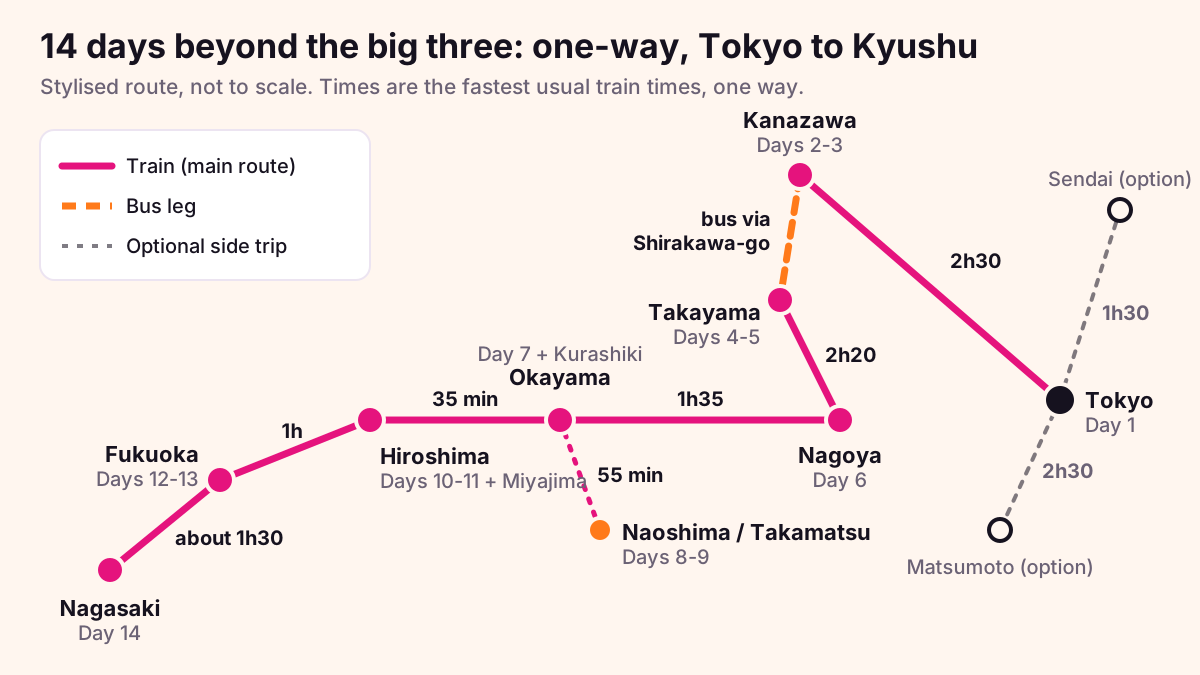
- Day 1: land in Tokyo.
- Days 2 to 3: Kanazawa.
- Days 4 to 5: bus via Shirakawa-go to Takayama.
- Day 6: Hida train to Nagoya.
- Day 7: Okayama, with an afternoon in Kurashiki.
- Days 8 to 9: Naoshima and Takamatsu.
- Days 10 to 11: Hiroshima and a night on Miyajima.
- Days 12 to 14: Fukuoka, then Nagasaki, and back to Fukuoka airport to fly home.
Only 10 days? Drop Nagoya, Naoshima and Nagasaki. Want mountains? Start with Matsumoto instead of Kanazawa and take the bus to Takayama.
Is the JR Pass still worth it in 2026?
For most of these trips, no. A one-way route like ours never doubles back, so you pay each leg once. The direct Tokyo to Fukuoka Nozomi is about ¥23,000 one way (japan-guide). Even a return trip costs less than the ¥53,000 7-day pass. Pass holders also pay a supplement for the fastest Nozomi and Mizuho trains: ¥6,500 from Tokyo to Hiroshima and ¥8,140 to Hakata.
Regional passes often fit better:
- Hokuriku Arch Pass, ¥30,000 for 7 days: Tokyo to Kanazawa by Shinkansen, then the Thunderbird to Kyoto and Osaka (JR West).
- Kansai-Hiroshima Area Pass, ¥17,000 for 5 days: includes the Shinkansen from Shin-Osaka to Hiroshima and the JR ferry to Miyajima (JR West).
- JR Kyushu Rail Pass, Northern Kyushu: ¥15,000 for 3 days or ¥17,000 for 5 days, and it covers Fukuoka to Nagasaki (JR Kyushu).
Add up your own legs in a fare app before buying any pass.
Budget tips
- Sleep in the regional cities, not in Kyoto. Kyoto’s new tax bands make a ¥20,000 room cost an extra ¥1,000 per person per night. The new taxes in Sendai, Hiroshima Prefecture and Matsumoto are ¥200 to ¥300.
- Fly the long legs. Budget airlines fly Tokyo to Fukuoka from about ¥5,000 one way (japan-guide), against about ¥23,000 by train.
- Use an IC card for local trips. Suica and ICOCA work on Fukuoka’s trains and buses and on Hiroshima’s trams; japan-guide says Fukuoka’s tourist pass rarely beats paying by card.
- Keep tax-free purchases with you. From 1 November 2026, anything you ship home or leave behind loses the refund for that whole receipt.
- Get data before you land. An eSIM is usually cheaper than roaming. See eSIM vs roaming.
Booking: codes that work for this trip
Japan trip codes, October 2026
| Code | What you get | |
|---|---|---|
TRIPFLIGHT26 | Up to US$15 off your first flight on Trip.com. new users only · ends 31 Dec 2026 | Open Store → |
In app | 10% off your first hotel booking in the Trip.com app, plus Trip Coins (100 coins = US$1). new users · cap varies by region | Open Store → |
HOPTOP8 | 8% off Pelago day tours and attraction tickets. storewide · ends 30 Nov 2026 | Open Store → |
Indoleads | 5% off Saily eSIM data plans for Japan. data plans · ends 31 Dec 2027 | Open Store → |
Codes come from Trip.com’s promo-code page and the Pelago and Saily affiliate programmes. We haven’t tested them at checkout for every route or date, so check the total drops before you pay.
For JR and regional passes, airport transfers and day tours, see our Klook deals page, which lists the current app and card codes. More on Trip.com: Trip.com codes and how Trip Coins work.
See Japan hotels and flights on Trip.com →Frequently asked questions
What is the best city in Japan without the crowds in 2026?
Kanazawa is the best all-round pick: gardens, old districts and seafood, 2.5 hours from Tokyo. For the fewest foreign visitors, Okayama had only 0.68 million foreign guest nights in 2025, against 18.3 million in Kyoto.
Is the JR Pass worth it in 2026?
Usually not for a one-way trip. The 7-day pass costs ¥53,000 from 1 October 2026, while a Tokyo to Fukuoka return by single tickets is about ¥46,000. Regional passes such as the ¥17,000 Kansai-Hiroshima pass are often better value.
How much is the Japan departure tax in 2026?
It is ¥3,000 per person per departure from 1 July 2026, up from ¥1,000. It is added to your plane or ferry ticket, so you do not pay it separately.
Do I need JESTA to visit Japan in 2026?
No. Japan’s planned travel authorisation, JESTA, is targeted for fiscal 2028. Visa-exempt visitors enter as before in 2026.
How does tax-free shopping in Japan work from November 2026?
From 1 November 2026 you pay the full price, including tax, in the shop. You then do a customs check at departure and claim the refund, as long as you carry the goods with you and bought them within 90 days.
Sources: JNTO arrival statistics; Japan Tourism Agency Accommodation Survey 2025 (final); JR Central, JR West and JR Kyushu pass pages; Ministry of Foreign Affairs visa fees; FY2026 Tax Reform Outline (via Travel Voice); Kyoto City lodging tax; japan-guide (tax-free rules, Mount Fuji fees, access); Benesse Art Site Naoshima; Ekitan and local tourism boards for train times. Prices and features change by country; the official site is the final word. Last checked: 16 October 2026. Spicy Coupons is independent and may earn a commission from links on this page.